
Home / How teeth whitening works, options and Side effects
How teeth whitening works, options and Side effects
February 25, 2026
|Dr. Aniket Bose
TABLE OF CONTENT
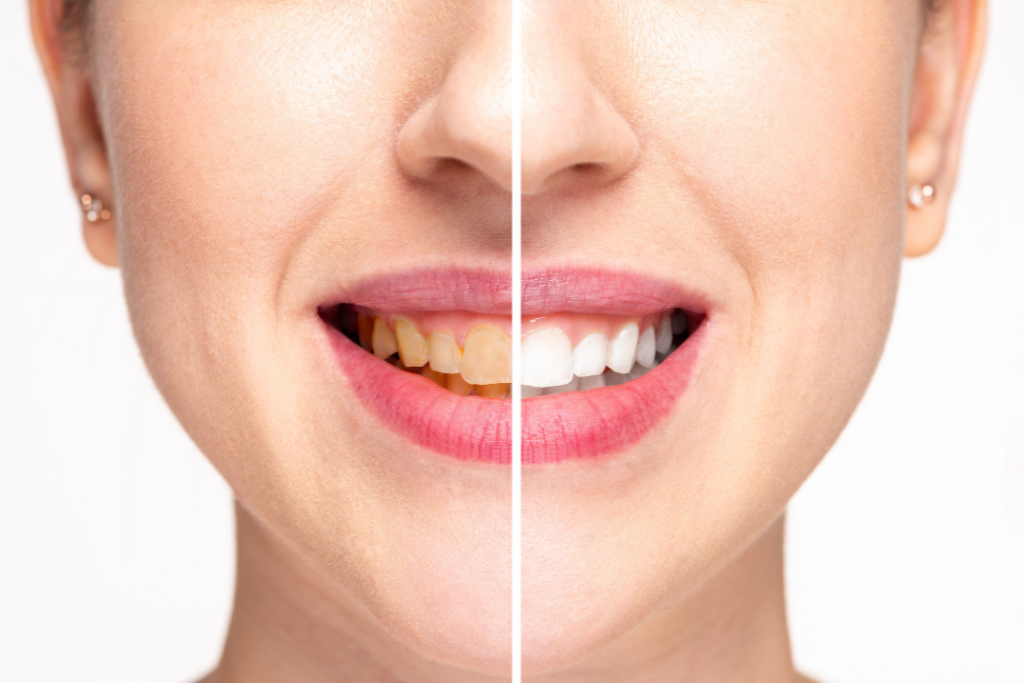
Your teeth are made of layers. The outer layer is enamel. It looks smooth, but under a microscope it has tiny pores. Over time, coloured particles from tea, coffee, tobacco and certain foods settle into these pores. This creates surface stains. Beneath enamel is dentin, which has a naturally yellow tone. As we age, enamel becomes thinner, and the yellowish dentin shows through more clearly. This is why teeth can appear darker even if you brush regularly.
Teeth whitening treatment is a cosmetic dental procedure that improves tooth colour by reducing stains that develop gradually due to stains and ageing. Professional teeth whitening uses dentist-approved whitening agents to target stains while protecting the enamel, and many patients notice visible improvement after one session.
Types of Tooth Stains
Achieving noticeable whitening results depends on understanding what is causing the discolouration. Stains that sit on the surface of the enamel require a different approach than those that develop deeper within the tooth.
If you are unsure about the source of your tooth discolouration, review the types of tooth stains explained below to better understand your condition.
- Intrinsic Stains
These stains begin inside the tooth, making them harder to remove. They can develop due to ageing, past dental injuries, certain medications, or excess fluoride, and may not respond fully to regular whitening.
- Extrinsic Stains
These stains affect the outer enamel and are commonly caused by tea, coffee, tobacco, coloured foods, or poor oral hygiene, and they usually respond well to professional whitening and dental cleaning.
Teeth Whitening Treatment Options
Teeth Whitening Products
Over-the-counter whitening products include whitening toothpastes and mouthwashes. Most work by using mild abrasives like baking soda or charcoal to remove surface stains, while some contain low levels of hydrogen peroxide or carbamide peroxide for a light bleaching effect.
Although these products can help with minor staining, frequent or long-term use of abrasive formulas may wear down enamel. Since enamel does not regenerate, it’s important to use such products carefully and ideally with dental advice. Many whitening products also include fluoride to help strengthen enamel and protect against future stains.
Teeth Whitening Remedies at Home
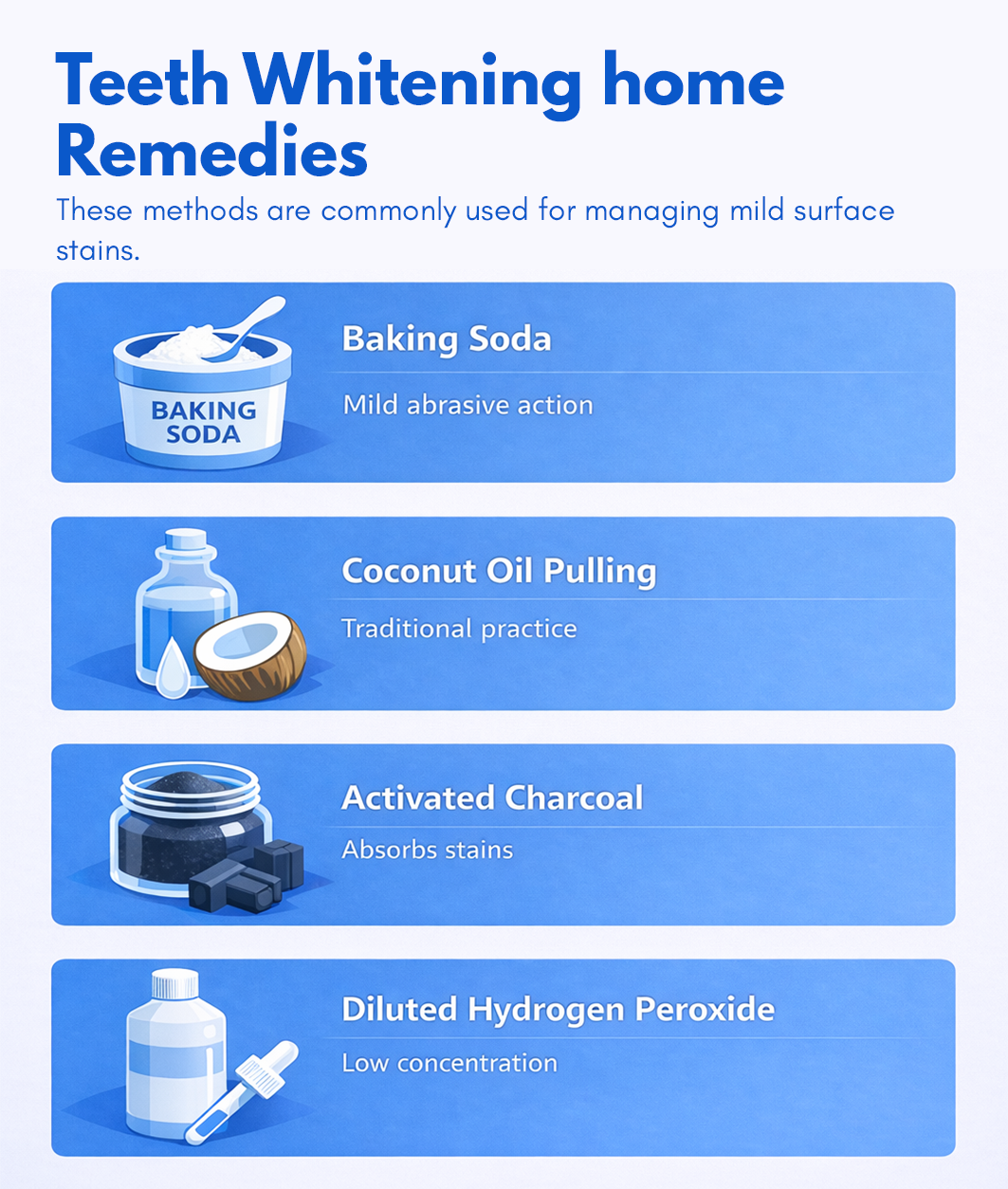
Many people try teeth whitening home remedies as an initial step to improve tooth colour at home. These methods are commonly used for managing mild surface stains.
- Baking soda: Used for its mild abrasive action, which may help remove surface stains when used occasionally.
- Coconut oil pulling: Practised as a traditional method that may help reduce surface buildup over time.
- Activated charcoal: Sometimes used to absorb surface stains, though frequent use may be abrasive.
- Diluted hydrogen peroxide: Used in low concentrations to help lighten surface stains when applied carefully.
Professional Teeth Whitening
Professional teeth whitening is a dentist-supervised procedure that removes stains to improve tooth colour, with visible results often seen in a single session. Smile For All Dental Clinic provides tailored options for teeth whitening in Kolkata, with each treatment recommended after evaluating the type of staining, tooth condition, and individual smile goals.
Below are other teeth whitening and smile-enhancing options provided by Smile for All Dental Clinic, Kolkata
Smile Transformation
A smile transformation is a personalised cosmetic plan designed to improve the overall appearance of your smile, and teeth whitening treatment is often included as one of the key steps.
Porcelain Veneers
For deep stains or cosmetic concerns where whitening can’t fully address, porcelain veneers offer an alternative solution. These thin ceramic shells cover the front of the teeth, creating a naturally white and uniform smile.
Cosmetic Crowns
A cosmetic crown is a custom-made, tooth-shaped restoration designed to cover and protect a damaged or weakened tooth. Made from durable materials such as ceramic or zirconia, it is carefully matched to the natural colour and shape of your teeth, restoring strength and function while maintaining a natural, seamless appearance.
What are the Teeth Whitening Side Effects?
After whitening, some patients experience short, sharp discomfort when consuming cold or hot foods and beverages. This occurs because whitening agents temporarily increase the permeability of enamel, allowing stimuli to reach the inner layer of the tooth more easily. In most cases, sensitivity subsides within 24 to 48 hours.
Mild gum irritation can also occur if the whitening gel comes into contact with soft tissues. This is usually temporary and resolves quickly, especially when the procedure is performed in a controlled clinical setting.
Overuse of over-the-counter whitening products or frequent application without dental supervision may increase the risk of prolonged sensitivity or enamel wear.
When properly planned and monitored, teeth whitening remains a safe and effective way to improve tooth colour with minimal and manageable side effects.
How to Maintain Your Natural Tooth Colour?
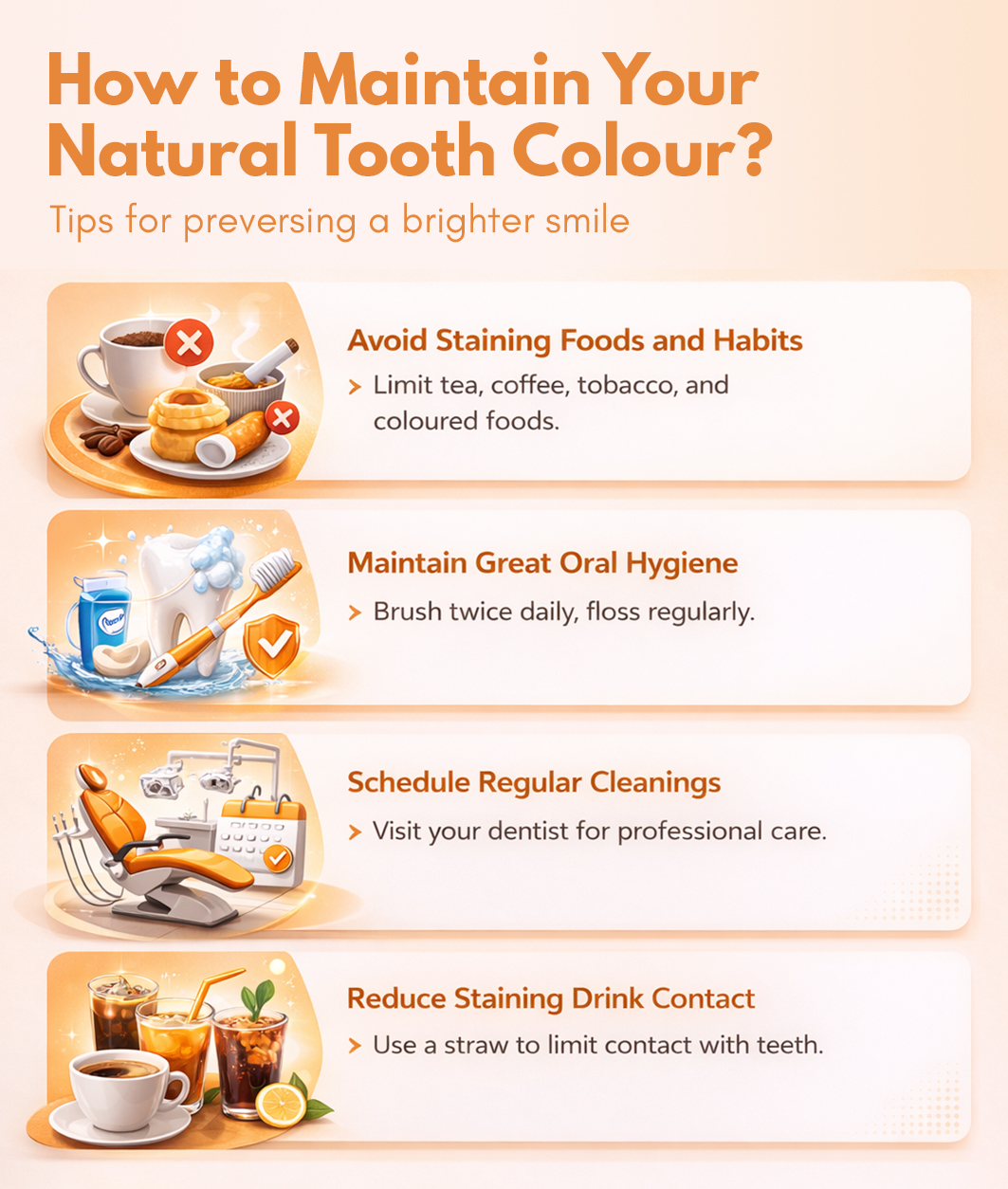
Maintaining a brighter smile depends on daily care, and small, consistent habits can help preserve whitening results for longer.
- Avoid staining foods and habits initially
Stay away from tea, coffee, tobacco, and strongly coloured foods for the first 48 hours, as teeth are more prone to staining during this period.
- Maintain good oral hygiene
Brush twice daily and floss regularly to prevent plaque buildup that can dull tooth colour.
- Schedule regular dental cleanings
Professional cleanings help remove surface stains and maintain overall oral health.
- Use dentist-recommended toothpaste
This supports enamel health and helps maintain whitening results without causing sensitivity.
- Reduce contact with staining drinks
Using a straw when possible can limit direct contact with teeth.
Frequently Asked Questions (FAQs)
What foods whiten teeth naturally?
Crunchy foods like apples, carrots, celery, and cucumbers help clean surface stains, while fruits such as strawberries and pineapple may help to reduce mild staining naturally.
Can yellow teeth become white again?
Yes, in most cases, yellow teeth caused by staining can be noticeably improved with professional treatment, while deeper intrinsic stains may need additional care.
What causes teeth staining?
Teeth staining is commonly caused by tea, coffee, smoking, poor oral hygiene, ageing, and certain medications, which gradually lead to surface or deeper tooth discolouration.
Which toothpaste is best for whitening teeth
A dentist-recommended whitening toothpaste with gentle polishing agents is best, as it helps remove surface stains without damaging the enamel.
Is teeth whitening permanent?
No. Results last about 6 months to 2 years, depending on habits and oral care.
Takeaways
Teeth whitening works best when the cause of discolouration is properly assessed and the right method is chosen. Professional guidance helps achieve safer, more predictable results, while good oral habits play a key role in maintaining a brighter smile over time.
Schedule your consultation now
If you’re facing ongoing dental problems and want expert guidance, contact Smile For All to schedule a consultation and find out whether this treatment is right for you.
Continue Reading