
Home / Things you should know before getting scaling and root planing (SRP) in kolkata
Things you should know before getting scaling and root planing (SRP) in kolkata
March 13, 2026
|Dr. Aniket Bose
TABLE OF CONTENT
Your gums play a vital role in supporting your teeth. Healthy gums fit closely around each tooth, forming small spaces that are easy to keep clean. However, when plaque and bacteria accumulate below the gum line, these spaces deepen and become infected. This condition is known as gum disease.
Scaling and root planing is a non-surgical periodontal treatments designed to remove infection from beneath the gums and help restore gum health. Many patients feel concerned when their dentist recommends teeth scaling or deep cleaning, especially when it comes to pain and cost. Understanding how the procedure works can help ease these worries and encourage timely treatment.
What is scaling & root planing (SRP)?
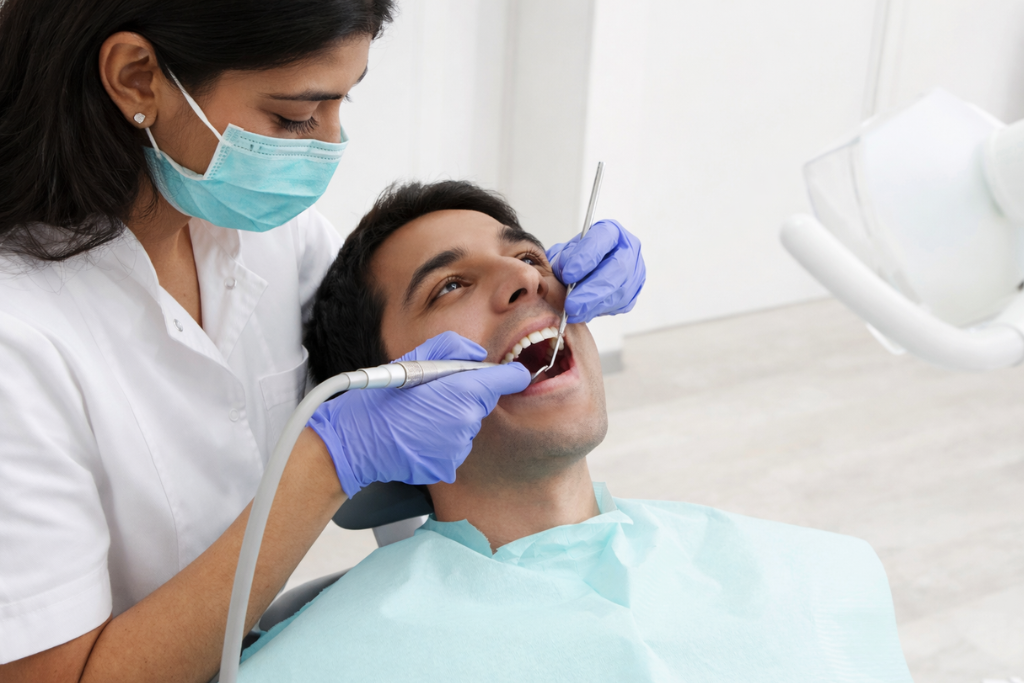
Scaling and root planing is a deep cleaning procedure used to treat gum disease (periodontitis). It focuses on removing plaque and hardened tartar from below the gum line, where regular brushing cannot reach.
If you’ve ever wondered about scaling teeth, it simply refers to the process of cleaning tartar deposits from tooth surfaces and gum pockets.
The procedure includes two steps:
- Scaling: This step removes plaque and tartar from tooth surfaces and periodontal pockets using specialized dental instruments or ultrasonic scalers.
- Root planing : This step smooths the root surfaces of the teeth. Smoother roots discourage bacterial attachment and help gum tissue reattach more securely.
The primary goal is to reduce infection, shrink gum pockets, and prevent further bone loss.
Why & when is scaling & root planing needed?
Healthy gum pockets typically measure 1-3 millimeters deep. When gum disease develops, pockets become deeper, trapping bacteria and increasing inflammation.
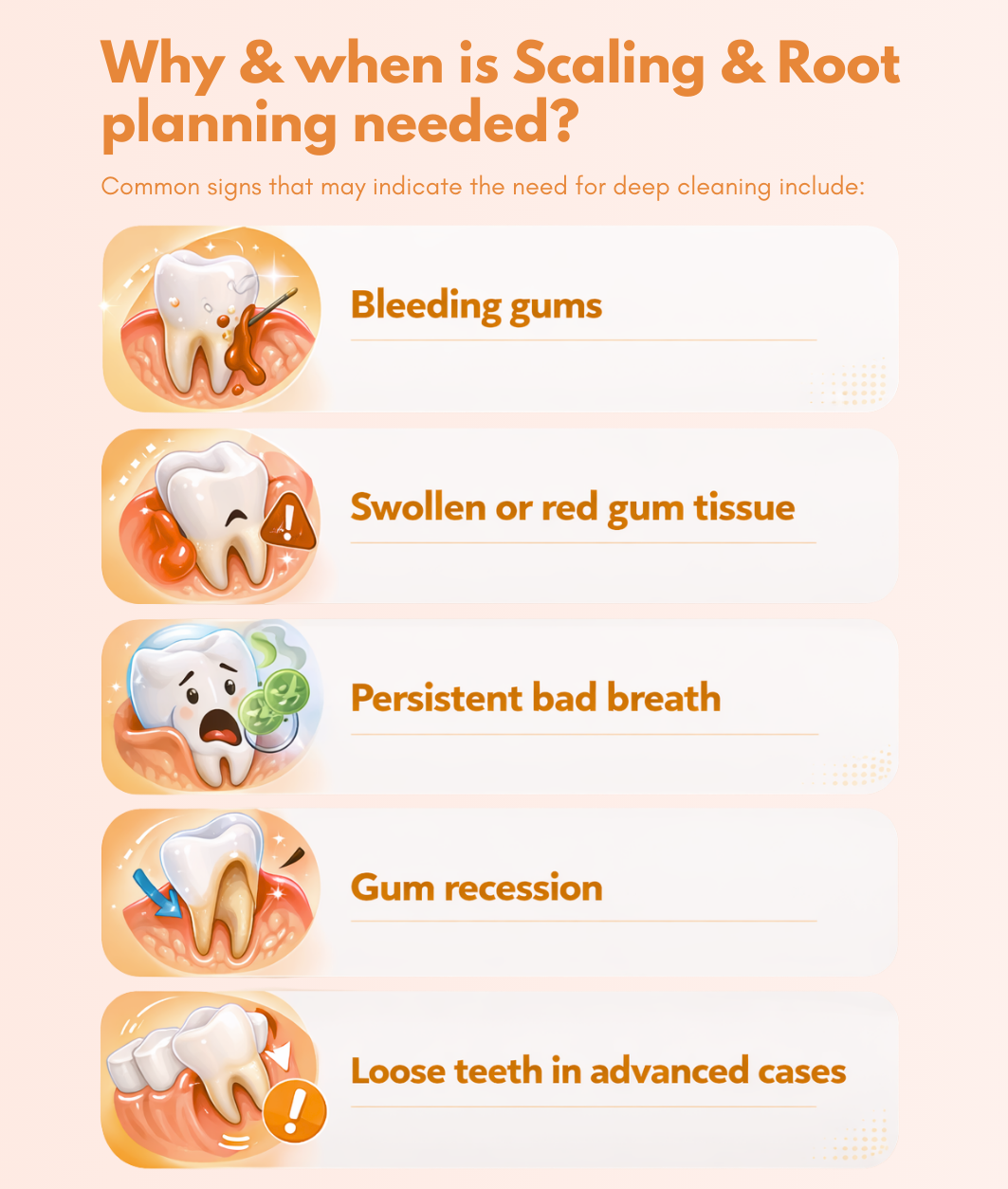
Common signs that may indicate the need for deep cleaning include:
- Bleeding gums
- Swollen or red gum tissue
- Persistent bad breath
- Gum recession
- Loose teeth in advanced cases
- Loose teeth in advanced cases
Early treatment prevents further damage to the bone and supporting tissues. If you’re comparing teeth cleaning vs. scaling, remember that scaling is therapeutic,it treats gum disease, while routine cleaning is preventive.
What happens during a deep cleaning at the dentist? step by step
The dentist first measures gum pockets to identify affected areas. The mouth is divided into quadrants, and treatment may be completed in one or multiple sessions depending on severity.
The steps include:
Gum Pocket Measurement
The dentist gently checks the depth of the space between your teeth and gums. This helps identify infected areas that need deeper cleaning.
Local Anaesthesia
A small amount of anesthesia is given to numb the area being treated. This keeps you comfortable and minimizes any pain during the procedure.
Special instruments are used to remove plaque and hardened tartar from below the gum line. You may feel light pressure, but the process is usually well tolerated.
Root Planing
The root surfaces are smoothed to remove rough spots where bacteria collect. This helps the gums heal and reattach more firmly to the teeth.
Antimicrobial Placement (If Needed)
If deeper pockets are present, medication may be placed inside them. This helps reduce bacteria and supports faster healing.
Treatment is usually done in sections and may require one to four visits. Each session lasts about 45–90 minutes, and most patients return to normal activities the same day.
Each session generally lasts 45 to 90 minutes. Patients can usually resume normal daily activities the same day.
Benefits and side effects of teeth scaling and root planing
What are the benefits of teeth scaling and root planing?
Scaling and root planing provide important benefits when gum disease is treated early.
-
- Reduces Infection and Bad Breath : Deep cleaning removes plaque, tartar, and bacteria from beneath the gum line, helping eliminate persistent bad breath and inflammation.
-
- Prevents Tooth Loss and Gum Damage : By protecting the bone and supporting tissues, the procedure helps prevent gum recession, tooth mobility, and advanced periodontal disease.
-
- Supports Overall Oral Health : Lowering bacterial levels in the mouth improves gum stability and reduces the risk of future complications.
What are the possible side effects?
Patients often ask about teeth scaling side effects. Side effects are usually mild and temporary:
- Sensitivity and Tenderness : Teeth may feel sensitive to hot or cold, and gums can be slightly sore for a few days.
- Minor Bleeding or Gum Shrinkage : Light bleeding is normal after treatment. As swelling reduces, gums may appear slightly lower, which is part of the healing process.
Serious complications are uncommon when the procedure is performed properly.
How to care for your gums after deep cleaning
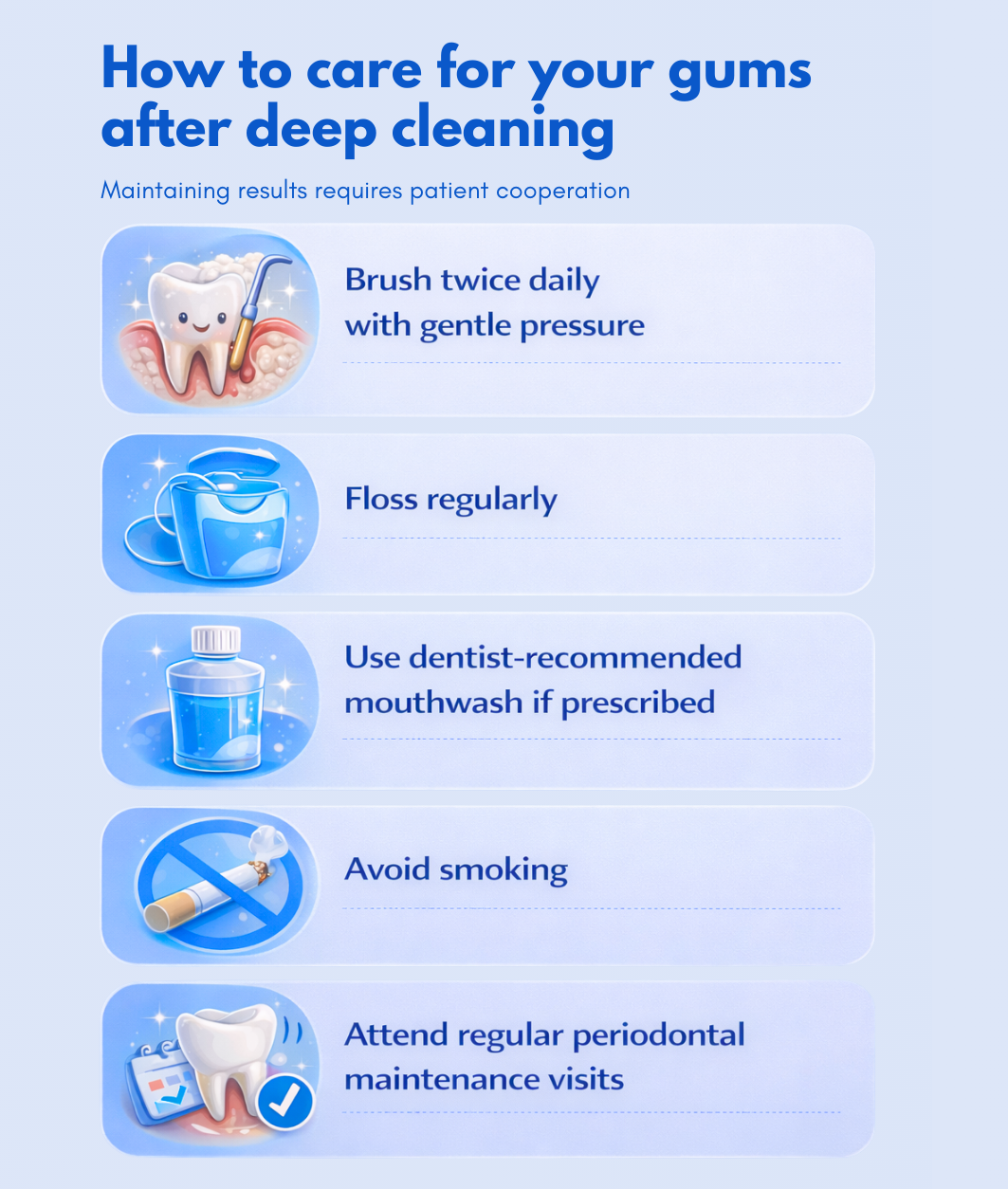
Maintaining results requires patient cooperation.
-
- Brush twice daily with gentle pressure
- Floss regularly
- Use dentist-recommended mouthwash if prescribed
- Avoid smoking
- Use dentist-recommended mouthwash if prescribed
- Avoid smoking
- Attend regular periodontal maintenance visits
- Brush twice daily with gentle pressure
Without proper care, gum disease can return.
Scaling and root planing costs in Kolkata
Money matters, and it’s natural to ask: How much will this set me back?
-
- In Kolkata, the cost varies depending on the clinic, severity of gum disease, and whether multiple sessions are needed.
- On average, it’s more than a routine cleaning but far less than surgical gum treatments.
- Many clinics offer packages or installment options, so don’t hesitate to ask about flexible payment plans.
- In Kolkata, the cost varies depending on the clinic, severity of gum disease, and whether multiple sessions are needed.
Remember: investing in gum health now can save you from much bigger expenses later, like tooth replacements or implants.
Frequently Asked Questions (FAQs)
Is scaling and root planing painful?
Most patients wonder, is scaling and root planing painful? With local anesthesia, discomfort is minimal. You may feel mild sensitivity afterward, but it usually subsides quickly.
How long does scaling and root planing take?
Each session typically lasts 45 to 90 minutes. Depending on the severity of gum disease, treatment may require one to four appointments.
How long does healing take?
Most discomfort improves within two to three days. Gum stability improves over one to two weeks.
Is scaling and root planing better than regular cleaning?
Yes, when gum pockets are deep. Routine cleaning removes surface plaque, while deep cleaning treats infection below the gum line.
Is scaling and root planing safe?
When performed by a qualified dentist, it is a safe and effective treatment for managing gum disease.
Takeaways
Scaling and root planing treats gum infection at its source and helps protect the bone and tissues supporting your teeth. The procedure is usually well tolerated with local anesthesia, and temporary sensitivity typically resolves quickly.
If you are experiencing bleeding gums or persistent bad breath, a periodontal evaluation can determine whether deep cleaning is necessary. Early treatment supports long-term oral health and helps preserve your natural teeth.
So, if you’ve been wondering what teeth scaling or debating between teeth cleaning vs scaling, remember: scaling and root planing is not just about cleaning,it’s about saving your smile.
Schedule your consultation now
If you’re facing ongoing dental problems and want expert guidance, contact Smile For All to schedule a consultation and find out whether this treatment is right for you.
Continue Reading