
Home / Dental filling types, procedure, cost & everything you need to know
Dental filling types, procedure, cost & everything you need to know
April 1, 2026
|Dr. Aniket Bose
TABLE OF CONTENT
Dental problems do not begin with strong pain. They usually start with small signs like sensitivity to cold drinks, mild discomfort while eating sweets, or a slight spot on the tooth. These early symptoms are easy to ignore because they do not affect daily routine immediately. However, these are the warning signs that the enamel may be weakening and a cavity could be forming. If ignored, the cavity can grow deeper, leading to increased sensitivity and discomfort while eating. Many people wait until the pain becomes severe, but by then the treatment may become more complex. Treating the problem early helps keep it simple and prevents further damage.

At Smile for All Dental Clinic, we often see patients who wish they had addressed these early signs sooner. The good news is that when treated at the right time, a simple cavity filling / dental filling can effectively restore the tooth, relieve discomfort, and help you avoid more complex procedures later.
What is a dental filling?
A dental filling is a quick and effective way to treat a cavity before it becomes a bigger problem. The damaged part of the tooth is removed and replaced with a strong dental filling material, restoring its function and protecting it from further decay.
When treated early, a simple cavity filling can save your tooth, reduce discomfort, and help you avoid more complex treatments later.
Who needs dental fillings?
Let’s be honest, most people don’t think about fillings until the problem becomes serious. But if you’re noticing any of these signs, your tooth may already need a simple filling.
- Your tooth flinches at hot tea, ice cream, or cold water
- You see small holes, dark spots, or rough patches on your teeth
- Chewing or biting on one side feels uncomfortable or sharp
- Food keeps sticking in the same spot, even after brushing
- You feel like your tooth is weaker or chipping than before
Which dental filling is right for you?
When you’re told you need a filling, one of the first questions that comes to mind is, “what are my options?”
Modern dentistry offers several types of fillings, each with its own benefits in terms of strength, appearance, and durability. The right choice depends on the location of the cavity, how visible the tooth is, and what works best for you in terms of cost and long-term comfort.
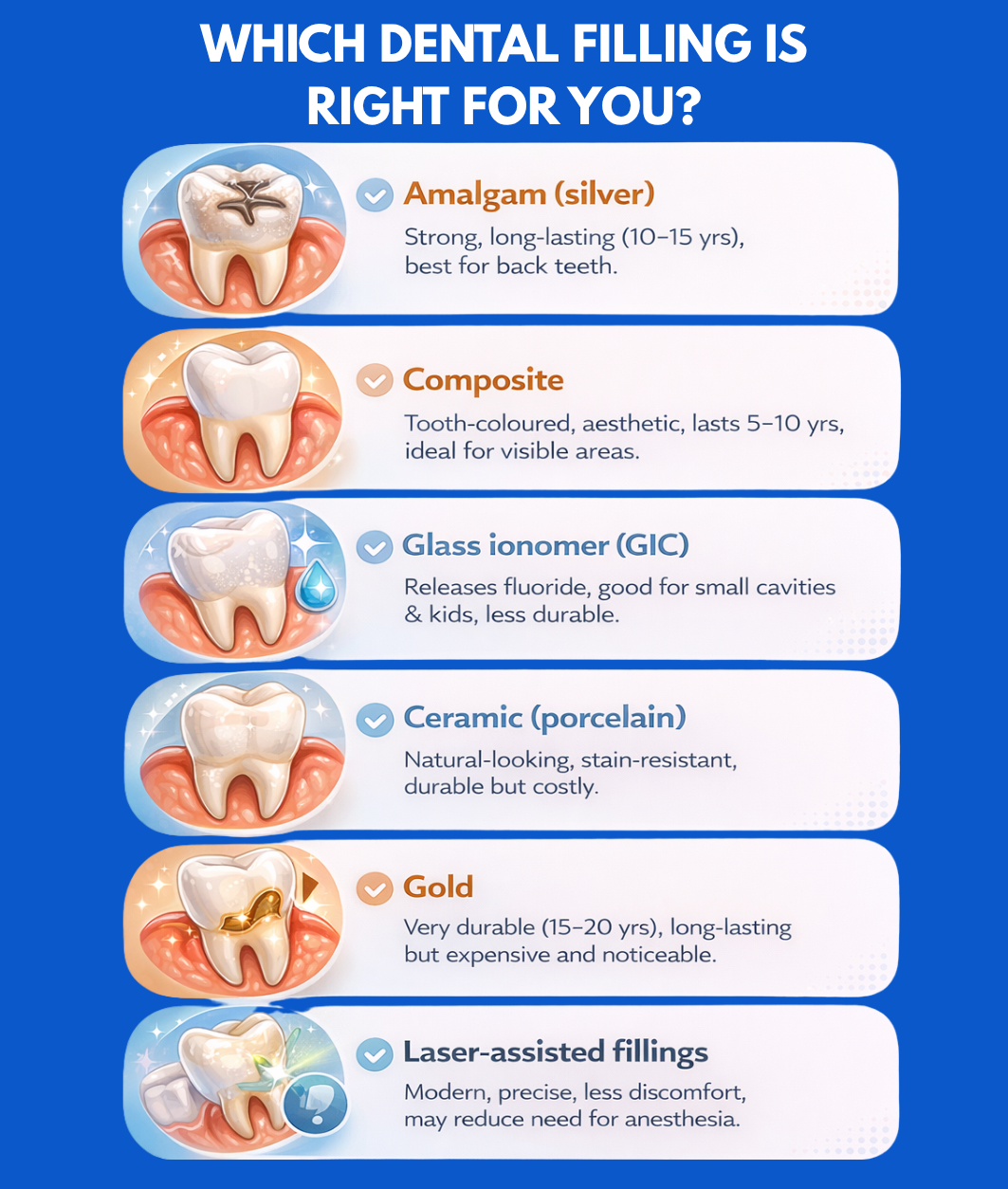
Types of dental fillings
Amalgam (silver) fillings – These are traditional fillings known for their strength and durability. They are cost-effective and can last 10 -15 years, making them suitable for back teeth that handle heavy chewing.
Composite fillings – These are tooth-coloured fillings designed to blend with your natural teeth. They offer good aesthetics and moderate durability, usually lasting 5 – 10 years, and are commonly used for visible areas.
Glass ionomer fillings (GIC) – GIC dental fillings release fluoride over time, helping protect the tooth from further decay. They are less durable but are often used for small cavities, areas near the gumline, or in children.
Ceramic (porcelain) fillings – These provide a natural appearance and are resistant to staining. They are durable and suitable for patients looking for long-term aesthetic results, though they are relatively higher in cost.
Gold fillings – Known for their longevity, gold fillings can last over 15 – 20 years. They are highly durable but are more expensive and less commonly chosen due to their metallic appearance.
Laser-assisted dental fillings – This is a modern approach where a laser is used to remove decay. It is precise, reduces discomfort, and may minimize the need for anaesthesia in some cases.
Choosing the right filling is a clinical decision based on factors such as cavity size, tooth location, bite pressure, and overall oral condition.
How does the dental filling process work?
The dental filling procedure begins with examining the affected tooth and numbing the area for comfort. The decayed portion is carefully removed, and the cavity is cleaned to prevent infection. A suitable dental filling material is then placed, shaped, and polished. This cavity filling procedure is simple, comfortable, and usually completed in a single visit.
Is dental filling painful?
One of the most common concerns is pain, but in reality, dental fillings are usually painless. With modern anaesthesia and techniques, the procedure is comfortable and quick. You may feel slight pressure during treatment and mild sensitivity afterward, but this usually settles within a short time.
How long do dental fillings last?
The lifespan of a dental filling depends on the dental filling material used and your daily oral habits.
- Composite dental filling: 5-10 years
- Amalgam & ceramic: 10-15 years
- Gold: 15-20+ years
Regular dental check-ups and good oral hygiene play an important role in helping your fillings last as long as possible.
How do you know if a filling needs replacement?
Fillings can get loose or damaged with use and leave small gaps where germs can enter. You may feel sensitivity, pain while chewing, or notice food getting stuck. The tooth may also feel rough. Sometimes decay can grow under the filling without clear signs, so it’s best to get it checked early.
What is the dental filling cost ?
One of the most common questions patients have is about the cost. The truth is, the dental filling cost can vary depending on the type of dental filling material used and how big or deep the cavity is.
A small cavity is usually quicker and more affordable to treat, while a larger one may require more time and a different material. In general, cavity filling cost can range from budget-friendly options like GIC fillings to more advanced and durable choices like ceramic or gold fillings.
Treating the cavity early not only keeps the procedure simple but also helps keep the cost low.
What’s the difference between dental filling and RCT?
A common concern is understanding whether a tooth needs a simple filling or a root canal treatment. Both dental filling and RCT are used to treat tooth decay, but they are recommended at different stages.
The decision mainly depends on how deep the cavity is. If the problem is detected early, a simple dental filling is usually enough. It is a quick and comfortable procedure that removes the decay and restores the tooth.
However, if the decay has progressed deeper and reached the nerve, a root canal treatment (RCT) becomes necessary to clean the infection from inside the tooth and save it.
One important thing to understand is that after an RCT, the tooth may become slightly weaker. That is why a dental crown (cap) is usually recommended to protect the tooth, restore its strength, and allow normal chewing.
Frequently Asked Questions (FAQs)
Is tooth pain after dental filling normal?
Yes, mild pain or sensitivity after a dental filling is normal and usually settles within a few days.
How long does a dental filling procedure take?
Most dental fillings take around 20 to 40 minutes, though larger or multiple cavities may take longer.
What is the best type of dental filling?
There is no single best option, composite fillings are preferred for appearance, while amalgam or ceramic may be chosen for strength and durability depending on the tooth.
What is the cost of dental filling?
The cost of a dental filling depends on factors like the type of filling material used, the size of the cavity, and the condition of the tooth. A dentist can give an accurate estimate after examining your teeth.
Takeaways
Dental fillings are not just about treating a cavity, they’re about acting at the right time to protect your tooth. Understanding your options and knowing what to expect helps you make confident, informed decisions.
With the right care and timely treatment, you can keep the process simple, comfortable, and effective in the long run.
Schedule your consultation now
If you’re facing ongoing dental problems and want expert guidance, contact Smile For All to schedule a consultation and find out whether this treatment is right for you.
Continue Reading