
Home / Why You Have Bad Breath and How to Fix It Permanently
Why You Have Bad Breath and How to Fix It Permanently
January 15, 2026
|Dr. Aniket Bose
TABLE OF CONTENT
Bad breath is a common problem that many people experience at some point. It can make everyday interactions uncomfortable, especially when speaking closely with others. Even with regular brushing and mouthwash, some people notice that the odor keeps coming back, which can feel confusing and frustrating.
At Smile For All Dental Clinic, we see patients every day who share this concern. In many cases, bad breath is not just about food habits or oral hygiene. It is often linked to underlying dental issues that need proper attention. In this blog, we explain why bad breath happens and how simple home remedies and dental treatment can help to manage it effectively.

What Causes Bad Breath
Bad breath starts when odor-causing bacteria build up in the mouth. This is why the smell can return even after brushing. Understanding what is causing bad breath early makes it easier to choose the right care and prevent the problem from becoming long lasting.
You may experience bad breath due to the following common causes:
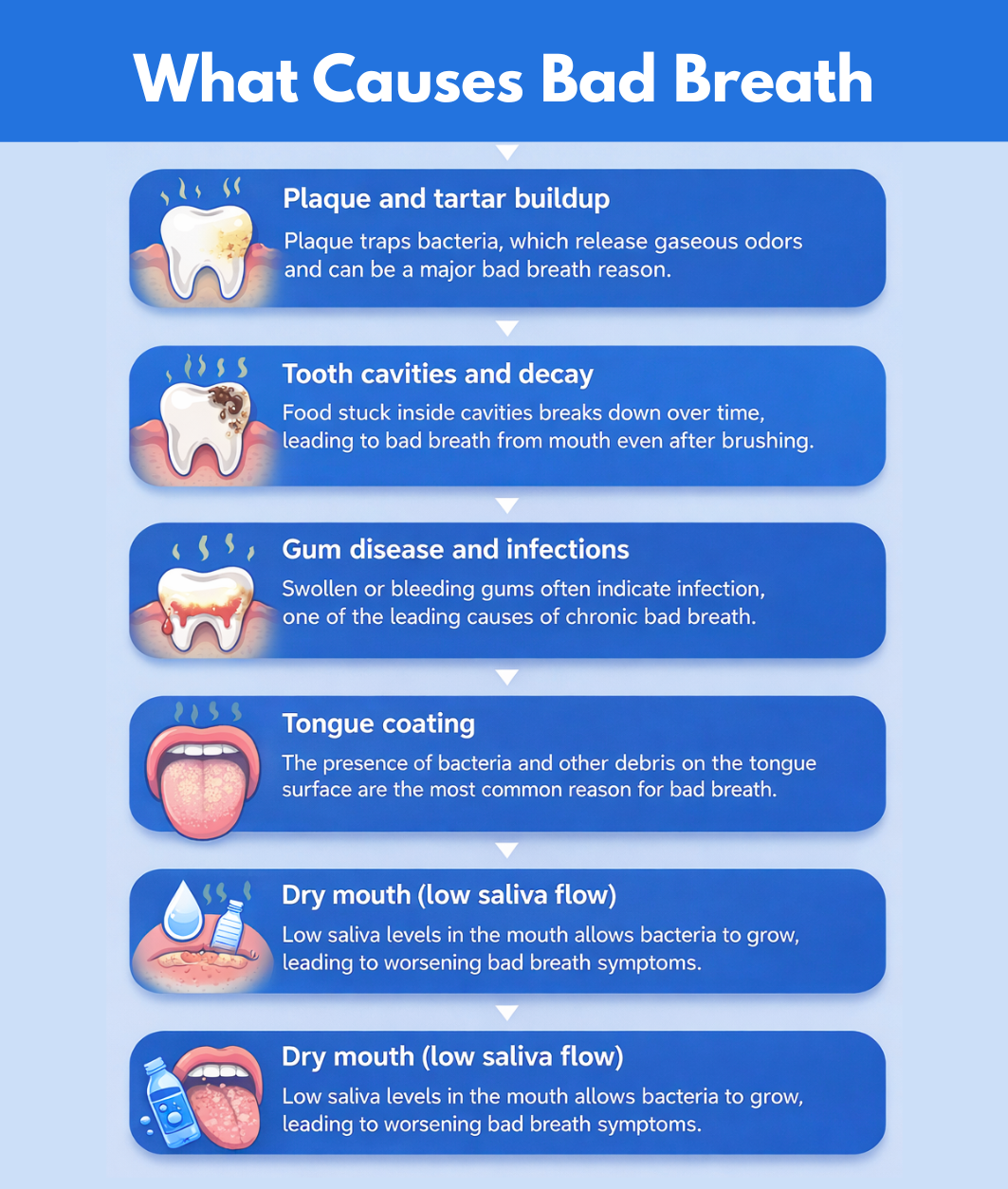
- Plaque and tartar buildup
Plaque traps bacteria, which release gaseous odors and can be a major bad breath reason.
- Tooth cavities and decay
Food stuck inside cavities breaks down over time, leading to bad breath from mouth even after brushing.
- Gum disease and infections
Swollen or bleeding gums often indicate infection, one of the leading causes of chronic bad breath.
- Tongue coating
The presence of bacteria and other debris on the tongue surface are the most common reason for bad breath.
- Dry mouth (low saliva flow)
Low saliva levels in the mouth allows bacteria to grow, leading to worsening bad breath symptoms.
- Underlying health conditions
Sinus issues, acid reflux, tonsil stones, and other general health conditions can also cause persistent bad breath.
These causes often grow slowly without being noticed. Knowing the real cause early helps to treat bad breath properly and stops it from becoming worse.
Bad Breath symptoms that signal it’s time to see a dentist
- Bad smell even after brushing
If your mouth still smells unpleasant soon after brushing, the cause may be hiding below the gum line or on the tongue, not on the teeth alone.
- Bitter taste in the mouth
A constant bitter or metallic taste often points to bacteria buildup or infection that regular mouthwash cannot remove.
- Bleeding gums
Gums that bleed while brushing or flossing are a warning sign. Gum infection is one of the most common reasons bad breath does not go away.
- White coating on the tongue
A thick white layer on the tongue traps odor causing bacteria. Brushing alone usually does not clean this area properly.
- Dry mouth throughout the day
When your mouth feels dry for long hours, bacteria grow faster. Saliva helps wash them away, and without it, bad breath becomes worse.
Difference between temporary mouth odour and chronic bad breath
Temporary Mouth Odour or Occasional Bad Breath problems are usually temporary and may occur due to certain foods, morning dryness, dehydration, or poor oral hygiene. It often improves after brushing, drinking water, or following basic oral care.
On the other hand, chronic bad breath is persistent and does not go away easily. Based on our experience, it continues despite regular brushing and home care. This kind of bad breath indicates more serious dental or health-related issues.
The causes of chronic bad breath commonly include plaque buildup, untreated dental cavities, gum disease, tongue coating, dry mouth, or other underlying issues like sinus infections or acid reflux. Unlike temporary bad breath, which can be treated with a simple rinse, chronic bad breath usually requires professional assessment and specific treatment.
Home Remedies for Bad Breath
Home remedies can reduce the smell of your mouth when they are used consistently. Based on our research, they work best in cases of mild bad breath as well as for supporting care alongside good oral hygiene.
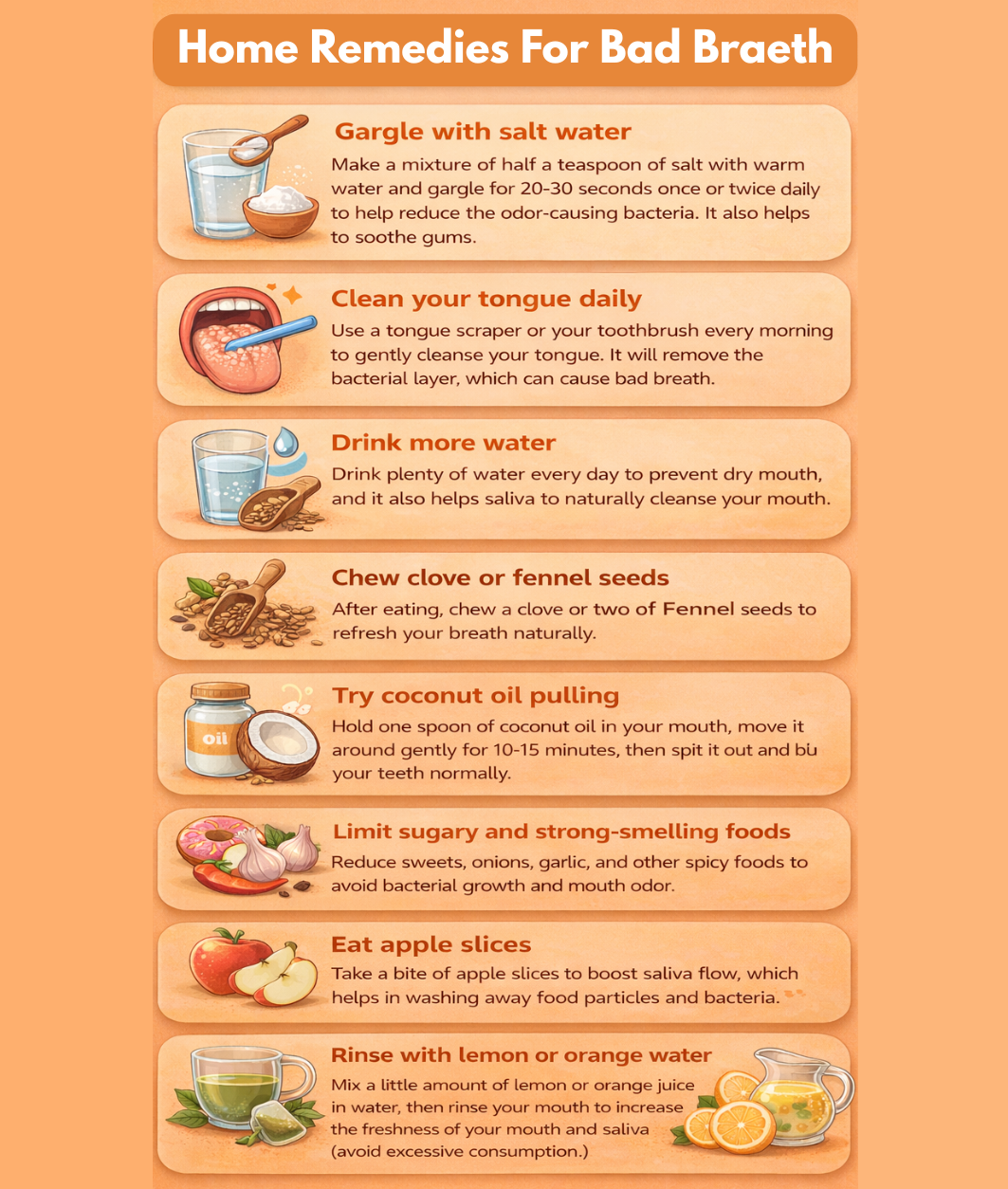
- Gargle with salt water
Make a mixture of half a teaspoon of salt with warm water and gargle for 20-30 seconds once or twice daily to help reduce the odor-causing bacteria. It also helps to soothe gums.
- Clean your tongue daily
Use a tongue scraper or your toothbrush every morning to gently cleanse your tongue. It will remove the bacterial layer, which can cause bad breath.
- Drink more water
Drink plenty of water every day to prevent dry mouth, and it also helps saliva to naturally cleanse your mouth.
- Chew clove or fennel seeds
After eating, chew a clove or two of Fennel seeds to refresh your breath naturally.
- Try coconut oil pulling
Hold one spoon of coconut oil in your mouth, move it around gently for 10-15 minutes, then spit it out and brush your teeth normally.
- Limit sugary and strong-smelling foods
Reduce sweets, onions, garlic, and other spicy foods to avoid bacterial growth and mouth odor.
- Eat apple slices
Take a bite of apple slices to boost saliva flow, which helps in washing away food particles and bacteria.
- Rinse with lemon or orange water
Mix a little amount of lemon or orange juice in water, then rinse your mouth to increase the freshness of your mouth and saliva (avoid excessive consumption).
- Drink green tea
Replace regular tea with green tea once a day to combat the bacteria that cause odor.
- Chew fresh parsley
After eating, chew a small amount of parsley to naturally freshen your breath.
At Smile For All Dental Clinic, we often see that simple home remedies for bad breath can help when the problem is mild. But if bad breath keeps returning despite regular care, it usually means the real cause needs professional treatment, not just temporary relief.
When Bad Breath Needs Professional Treatment
If the problem is coming from plaque buildup
Plaque often hides in areas your toothbrush cannot reach. When bacteria collect there, bad breath slowly develops. A professional dental cleaning helps remove this buildup and control the problem at its source.
If cavities are causing mouth odour
Small holes in the teeth can trap food, allowing bacteria to grow and create an unpleasant smell. Treating the cavity and protecting the tooth with fluoride treatment helps reduce decay and keeps bad breath from returning.
Frequently Asked Questions (FAQs)
How to get rid of bad breath?
Maintaining a healthy oral hygiene, washing the tongue regularly, drinking plenty of water and seeking treatment from a professional when bad breath is persistent.
Why does my breath smell bad even after brushing?
The tongue coating, plaque, dental cavities, or dry mouth are all common causes of bad breath, even after brushing.
How to hide bad breath while talking?
Sip water frequently or chew sugar-free gum for temporary freshness, but treating the root cause is the best long-term solution.
What drink kills bad breath?
Drinking water, green tea and warm salt water help to reduce the odor-causing bacteria and improve the freshness of your mouth.
What fruit kills bad breath?
Apples, citrus fruits, and pineapple help to increase saliva flow and naturally reduce bad breath from mouth.
Takeaway
Bad breath is common, but a persistent bad breath problem should not be ignored. While home remedies for bad breath can help in mild cases, long-term freshness depends on identifying the real cause and choosing the right bad breath treatment. Early treatment not only improves bad breath but also protects overall oral health and confidence.
Schedule your consultation now
If bad breath is affecting your comfort or confidence, don’t wait for it to get worse. Our experienced dental team will help to find the real cause and guide you toward a lasting solution.
Continue Reading