
Home / Root Canal Treatment- Benefits, Risks & Recovery Guide
Root Canal Treatment: Benefits, Risks & Recovery
December 30, 2025
|Dr. Madhuja Ghosal
TABLE OF CONTENT
Root canal treatment is one of the most discussed dental procedures, yet it is also one of the most misunderstood. When the topic arises, many patients feel uncomfortable. In our daily practice, we often see this reaction. People hesitate not only because of pain, but also because they are unsure about the benefits, possible risks, and how recovery will feel.
This guide is designed to answer all those early questions. It introduces root canal treatment in a clear and practical way. We explain the benefits of the treatment, discuss the risks that patients should be aware of, and outline what recovery typically involves. The goal is to provide clarity from the start, so you can proceed with confidence.
For a complete overview of diagnosis, treatment approach, and care options, please visit our Root Canal Treatment service Page.

What Is Root Canal Treatment?
Root canal treatment is a dental procedure used to treat infection inside a tooth rather than removing the tooth completely. Many patients think it is done just to stop pain, however in reality, it is done to remove infected tissue from the tooth and prevent the infection from spreading further.
The problem starts when decay, repeated dental work, or injury allows bacteria to reach the inner part of the tooth, called the pulp. When the inner part is infected, this tissue can not recover on its own. If left untreated, the infection can lead to extreme discomfort, swelling, and also abscess development.
During Root Canal Treatment, the infected pulp is carefully removed, the inside of the tooth is cleaned up and disinfected, and the space is secured to protect it from future infection. From our experience, this treatment helps to save the natural tooth, relieves pain, and restores normal function without the requirement for removal..
If you’d like a deeper understanding of how this infection develops and why treatment matters, read our blog on What Is RCT & Why It’s Important.
Signs You May Need a Root Canal Treatment
You may need root canal treatment if you notice:
- Constant tooth pain, particularly during chewing
- Sensitivity to cold or hot that persists
- Deep cavities or visible tooth decay
- Swelling or tenderness in the gums
- Darkening or damage to a tooth
These signs usually indicate infection inside the tooth. A Timely root canal treatment helps to prevent the problem from getting worse and also protects your natural tooth.
In cases where tooth damage occurs due to an accident, treatment may also be part of Traumatic Dental Injuries Management.
How Root Canal Treatment Is Performed
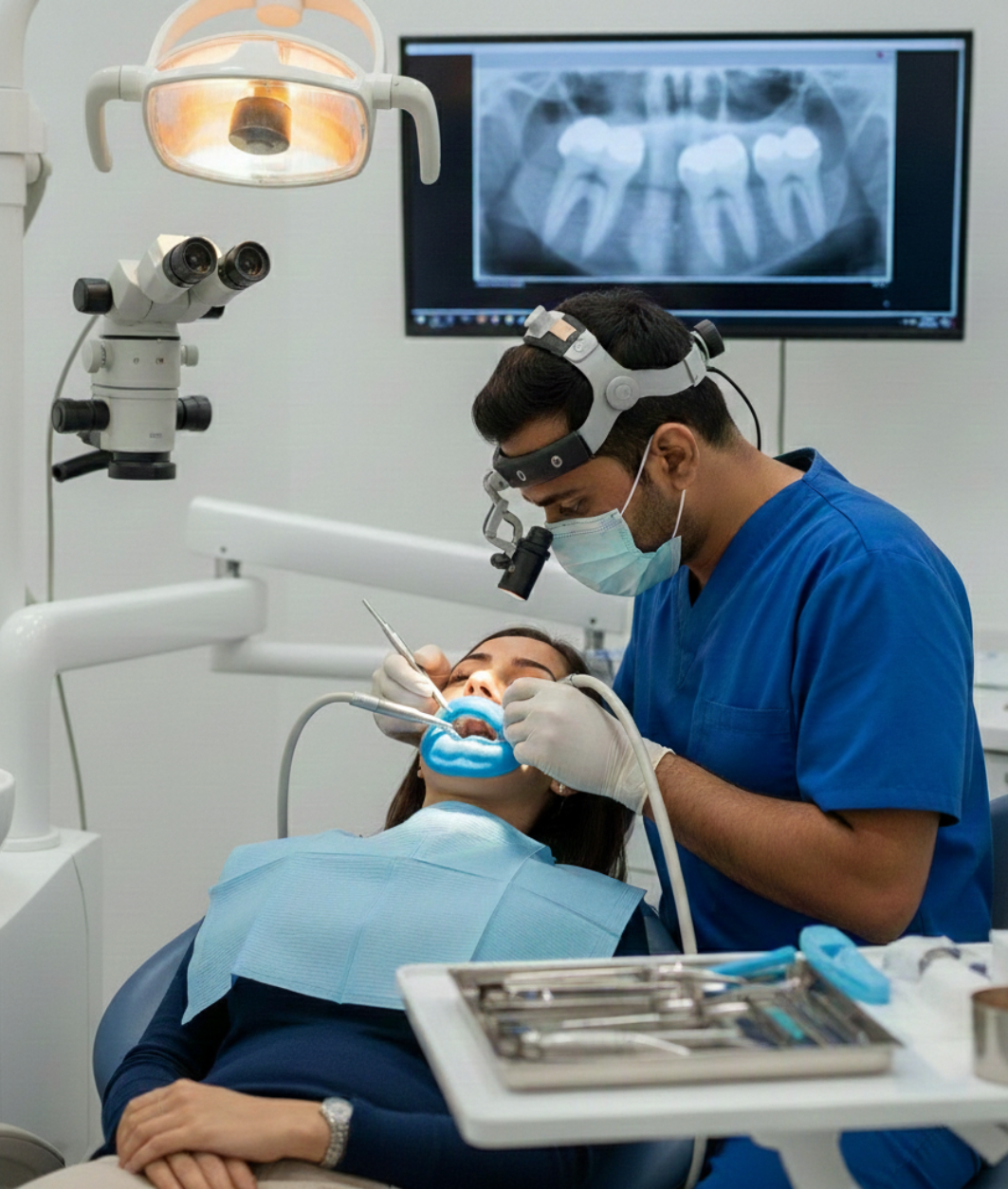
Understanding the root canal treatment procedure often helps patients feel more confident before the procedure. Anxiety comes from not knowing what will happen during root canal treatment. In reality, the procedure has an organized process focused on removing infection and relieving pain.
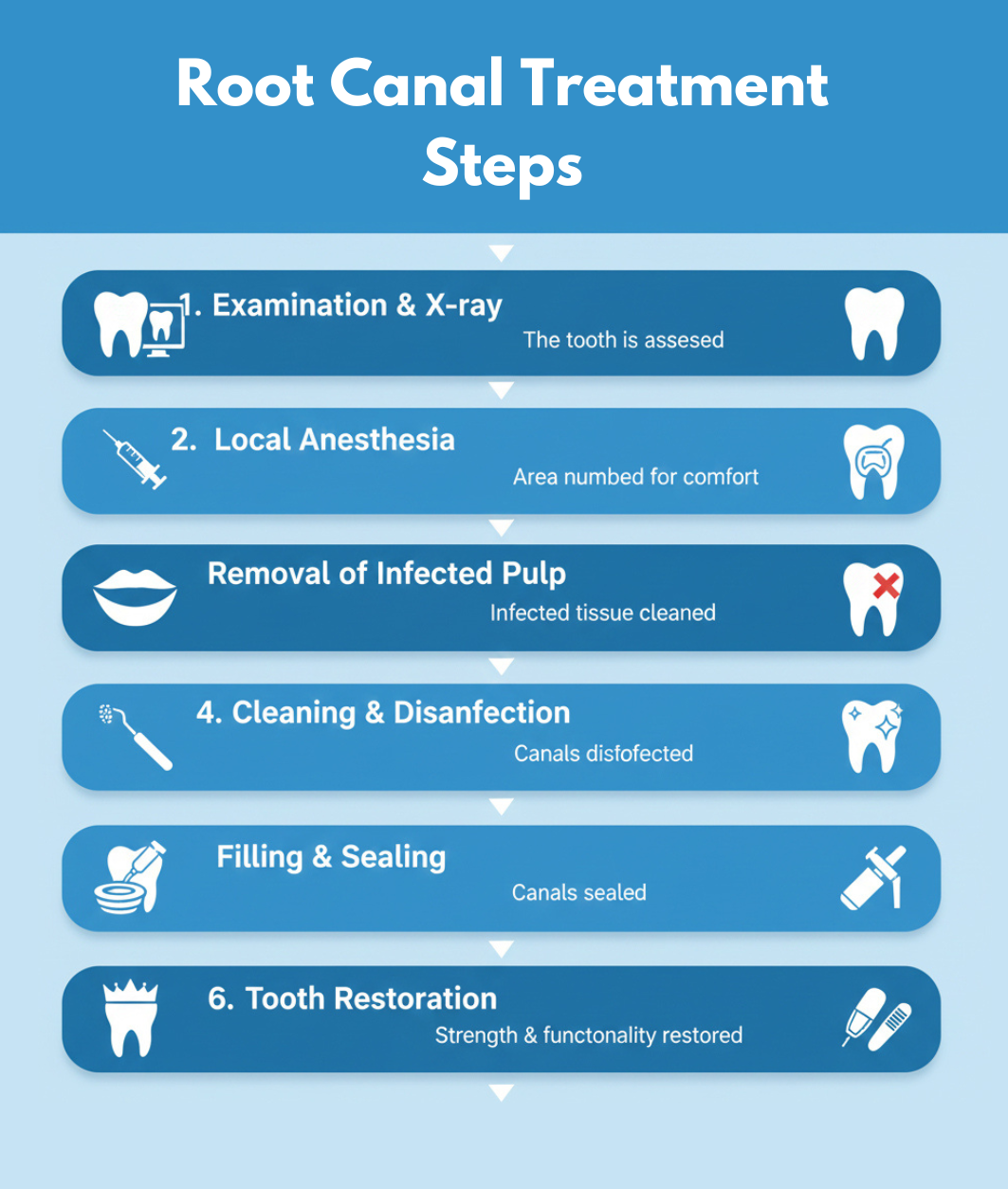
Root canal treatment steps usually include:
- Examination and X-ray: The tooth is assessed to understand the extent of infection.
- Local anesthesia: For maximum comfort during treatment, the area will be numbed to ensure comfort during treatment.
- Removal of infected pulp: Infected tissue is cleaned from inside the tooth.
- Cleaning and disinfection: The canals must be disinfected to stop bacteria from spreading further.
- Filling and sealing: The canals are sealed to prevent reinfection.
- Tooth restoration: Fillings and crowns provides essential restoration for strength and functionality of teeth.
If a previous root canal treatment does not heal properly, Endodontic Retreatment may be recommended to address persistent infection.
What are the Benefits of Root Canal Treatment?
Many patients fear that root canal treatment will create more problems, but in reality, the opposite is usually true. Understanding the benefits of root canal treatment helps patients see why this procedure is often the best way to manage an infected tooth.
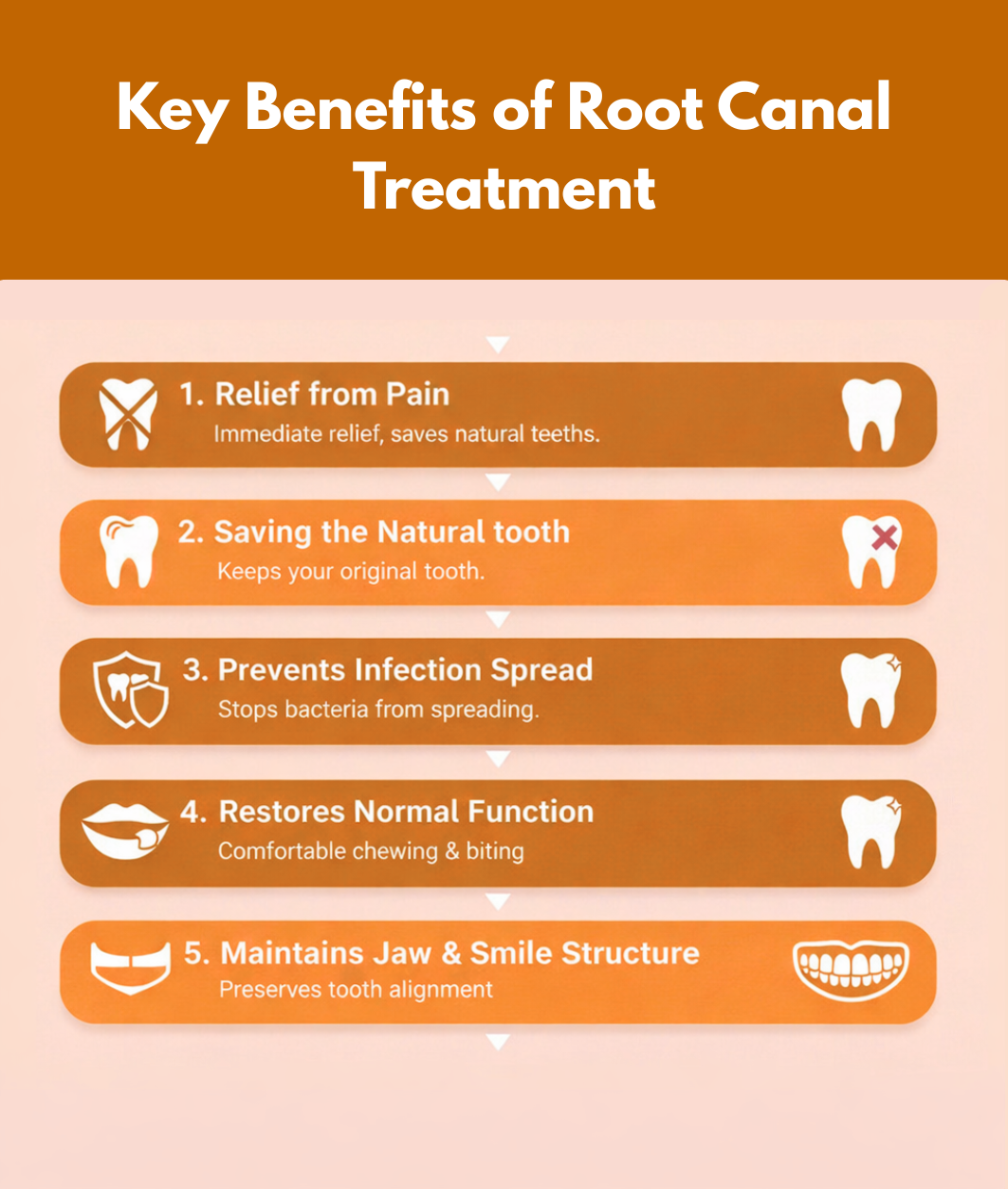
Key benefits of root canal treatment include:
- Relief from pain: Removing the infected pulp provides immediate relief, saving natural teeth rather than extracting.
- Saving the natural tooth: Root canal treatment allows you to keep your original tooth instead of removing it.
- Prevents infection spread: Early intervention prevents infections from spreading to neighboring teeth and gums.
- Restores normal function: Chewing and biting become comfortable again after healing.
- Maintains jaw and smile structure: Preserving the tooth helps prevent shifting of surrounding teeth.
From our experience at Smile For All Dental Clinic, these benefits of root canal treatment make recovery smoother and long-term oral health more secure.
These outcomes are best achieved when treatment is planned early through a dedicated Root Canal Treatment consultation.
Root Canal Treatment Side Effects
Concerns about root canal treatment side effects are very common, especially among patients who are already dealing with tooth pain. In most cases, people experience mild and short-term side effects after treatment. Many patients are surprised to find that the tooth actually feels better once the infection is removed compared to before treatment began.
Common root canal treatment side effects include:
- Mild soreness: The treated area may feel tender for a few days as healing begins.
- Temporary sensitivity: Some sensitivity while biting or chewing is normal at first.
- Slight gum swelling: This usually goes away within a short timeframe on its own.
- Jaw discomfort: Staying with an open mouth may lead to temporary stiffness of the jaw.
- Rare complications: In uncommon situations, additional care may be needed if infection persists.
At Smile For All Dental Clinic in Kolkata, our experience shows that root canal treatment is usually not painful. With modern techniques, discomfort is manageable and less serious than the problems caused by leaving a tooth infection untreated.
Root Canal Treatment Cost in Kolkata
Patients visit us with concerns regarding pain, often leading them to ask about the root canal treatment cost in Kolkata. This is natural when treatment is needed unexpectedly. Most people simply want clear information so they can plan without worry.
In real practice, the root canal treatment cost depends on several practical factors. These include tooth position, number of canals and surrounding tissue condition – each case varies, so costs will fluctuate accordingly.
For example, the root canal treatment cost for a wisdom tooth is often higher because they’re harder to access and usually have complex root structures. Early treatment tends to make things simpler and more predictable. This keeps the cost more manageable while lowering the risk. Addressing the issue early keeps the root canal treatment cost in Kolkata more reasonable and helps avoid added complications later.
At Smile For All Dental Clinic, we keep the things transparent and patient-focused. Our experienced dentists explain the treatment and costs, so quality dental care stays accessible and manageable.
For personalised cost details and treatment planning, you can book an appointment with our dental team.
Recovery and care after root canal treatment
Recovery after root canal treatment is often one of the greatest concerns among patients. After completion of the procedure, it’s normal to feel some mild tenderness or sensitivity around the treated tooth. In most cases, this usually resolves within several days as the surrounding tissues begin to heal, and patients gradually feel more comfortable than they did before treatment.
During the recovery period after root canal treatment, daily habits usually don’t need major changes. Gentle chewing on the opposite side, avoiding very hard foods for a short time, and following basic oral care advice helps the healing process. Many patients are relieved that they can return to their normal daily routine quickly.
A common question we hear is, “Can I brush my teeth after a root canal?”
The answer is very simple- Brushing can be continued the same day, as long as it’s done gently around the treated tooth. Taking simple care steps like this helps ensure smooth healing and long-term success after root canal treatment.
Frequently Answered Questions
How long does root canal treatment take?
Most root canal treatments are completed in one or two sittings, depending on the tooth and infection.
What to eat after root canal treatment?
Soft foods are best for the first few days after root canal treatment until sensitivity settles.
What to avoid after a root canal?
Avoid chewing hard or sticky foods on the treated tooth until it is fully restored.
How much does root canal treatment cost?
The cost varies based on the tooth involved, infection severity, and whether a crown is needed.
What is the age limit for a root canal?
There is no age limit for root canal treatment as long as the tooth and surrounding bone are healthy.
Key Takeaways
- Root canal treatment is a safe and effective way to treat infection and save a natural tooth.
- Most concerns around pain come from myths. Modern root canal treatment is usually comfortable.
- Early diagnosis helps reduce complications, recovery time, and overall treatment cost.
- Temporary discomfort after root canal treatment is normal and improves within a few days.
- Proper aftercare and follow-up help ensure long-term success and tooth function.
Book Your Appointment
Tooth infections do not heal on their own. Book an appointment with our dental clinic now and get professional guidance.
Continue Reading